
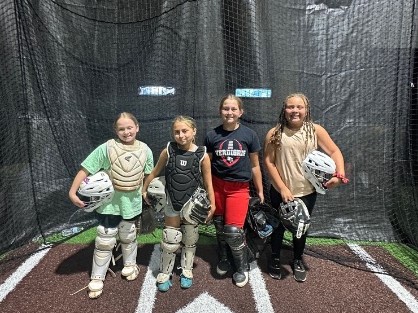
Catching instruction is a specialized training program designed to help baseball and softball players improve their skills as catchers. These lessons focus on developing the key attributes needed for effective catching, including proper technique, agility, game awareness, leadership, and physical conditioning. A catcher plays a critical role on the field, not just in receiving pitches, but in directing the defense, framing strikes, blocking balls in the dirt, and making accurate throws to various bases. Catching instruction teaches athletes how to excel in these areas and become more confident, reliable contributors to their team.
Core Areas of Catching Instruction:
- Stance and Positioning:
The foundation of good catching starts with a proper stance and positioning behind the plate. Catching instruction begins with teaching catchers how to set up in an athletic, balanced position that allows them to react quickly to any pitch. This includes the “primary stance” (or “ready position”), where the catcher keeps their body low and their weight slightly forward on the balls of their feet, knees bent, and glove in a position ready to catch. Catchers also learn how to adjust their positioning based on the pitcher’s mechanics, pitch type, and game situation, ensuring they’re always in the best spot to receive the ball efficiently and make quick decisions. - Receiving and Framing Pitches:
A critical skill for catchers is receiving the pitch, or “framing.” This involves catching the ball cleanly and presenting it to the umpire in a way that increases the likelihood of a strike call. Good receiving technique ensures the catcher’s hands are soft, their glove is steady, and they can subtly adjust to the pitch’s location without jerking or pulling the glove. Instruction focuses on how to “frame” pitches on the edges of the strike zone, guiding the pitch into the glove and holding it for a split second to enhance the chance of a strike call. Advanced techniques teach catchers how to frame pitches effectively for both fastballs and breaking balls, and how to adjust their setup for different pitchers and situations. - Blocking Pitches in the Dirt:
Catchers are often required to block pitches that bounce in front of the plate, especially on breaking balls or wild pitches. Blocking instruction focuses on body positioning and technique for preventing the ball from getting past the catcher and advancing runners. Catchers learn how to drop to their knees quickly, use their chest and legs to absorb the impact of the ball, and keep their body low to the ground to minimize the ball’s escape. Instruction includes drills that teach the catcher to track the ball all the way to the plate, anticipate its movement, and react quickly to get into position for a successful block. - Throwing and Quick Release:
A catcher’s ability to throw accurately and with speed is essential for controlling the running game. Throwing instruction teaches catchers how to make quick, strong, and accurate throws to second base, third base, or home plate. The emphasis is on developing a smooth, efficient throwing motion from a crouch position, maximizing arm strength while minimizing wasted motion. Instructors work with catchers on footwork to quickly transition from receiving to throwing, and on delivering a precise throw in as little time as possible. Catchers are also trained to adjust their throws based on game situations, such as throwing out runners attempting to steal or preventing a bunt from advancing the runner. - Pop Time and Transfer:
A key performance metric for a catcher is their “pop time”—the time it takes from the moment the ball hits the catcher’s glove to the moment the throw reaches the base. Catching instruction focuses on improving pop time through quick transfers and efficient mechanics. The transfer is the motion of moving the ball from the glove to the throwing hand as quickly as possible, which can be improved with repetition and correct technique. Drills are designed to help catchers improve both their footwork and their hand speed, ensuring they can make the most accurate and timely throws to prevent base stealing. - Leadership and Communication:
The catcher is often considered the quarterback of the defense, responsible for managing the game behind the plate. Catching instruction includes a focus on leadership, communication, and field awareness. Catchers must communicate effectively with pitchers, infielders, and outfielders, helping to signal pitch selections, positioning, and defensive plays. They are also often tasked with keeping the pitcher focused and calm, offering encouragement and insight. Instruction covers how to take control of the game, direct the defense, and maintain a positive, energetic presence. - Game Strategy and Pitch Calling:
Catchers have a unique perspective of the game, and part of their role is to call pitches that complement the pitcher’s strengths and exploit the hitter’s weaknesses. Catching instruction often includes teaching catchers how to read the game and make strategic pitch calls. This involves understanding the batter’s tendencies, the pitcher’s arsenal, and the game situation (e.g., pitch counts, number of outs, and runner position). Catchers learn how to anticipate the batter’s approach, communicate effectively with the pitcher, and adjust the pitch calling based on the flow of the game. - Conditioning and Agility:
Catchers need to be physically strong, agile, and endurance-focused due to the demanding nature of the position. Catching instruction often includes strength and conditioning components to build core strength, leg power, shoulder stability, and overall mobility. Conditioning exercises are specifically tailored for catchers to improve their flexibility, reaction time, and explosive movements. Agility drills also focus on improving the catcher’s ability to move quickly and smoothly while maintaining good posture, whether they’re tracking pitches, blocking balls, or throwing runners out. - Mental Toughness and Focus:
The catcher’s position is mentally demanding. They must maintain intense focus, react quickly under pressure, and deal with high-stress situations. Catching instruction incorporates mental training strategies to build resilience and focus. Catchers learn how to stay calm and composed in tight situations, handle tough umpires, and manage the ebb and flow of the game. Techniques such as visualization, mindfulness, and relaxation exercises help catchers stay sharp and perform under pressure. - Injury Prevention and Recovery:
Because the catcher’s role is physically taxing, injury prevention is a key component of catching instruction. Catchers are taught proper mechanics to prevent wear-and-tear injuries to the knees, shoulders, and back. Conditioning exercises aimed at strengthening the legs and core are emphasized to reduce the risk of injury. Catching instruction also includes recovery strategies such as stretching, foam rolling, and mobility exercises to keep the body flexible and reduce the likelihood of strains or overuse injuries.
Conclusion:
Catching instruction is a comprehensive and multifaceted training program aimed at developing a catcher’s skills both behind the plate and as a leader on the field. Effective catching requires a combination of technical expertise, physical conditioning, mental focus, and game awareness. With specialized drills, detailed feedback, and strategic guidance, catchers can enhance their skills in blocking, receiving, throwing, leadership, and pitch calling. Whether they are beginners or seasoned veterans, catching instruction helps athletes refine their abilities and become reliable, confident contributors to their team.